Lorem ipsum dolor sit amet, consectetur adipiscing elit. Ut elit tellus, luctus nec ullamcorper mattis, pulvinar dapibus leo.
Share this post with your friends

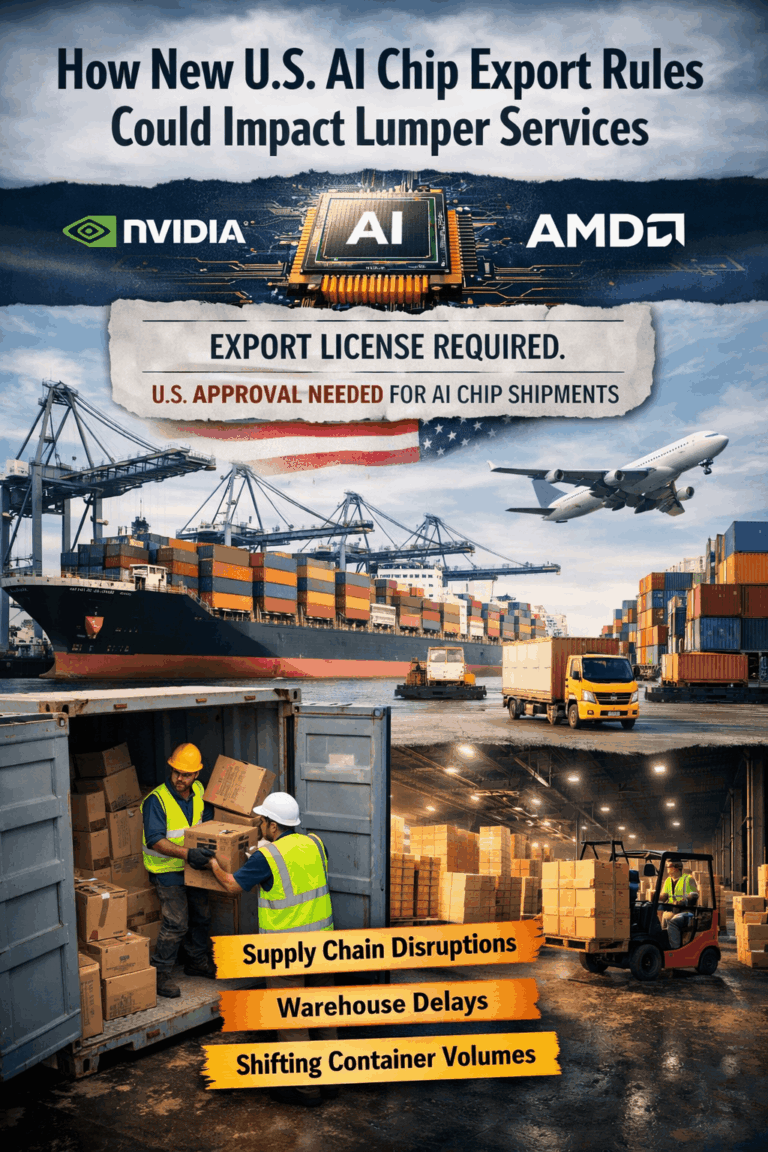
The United States government is currently considering a rule that would require companies to obtain a license before exporting advanced artificial intelligence (AI) chips to any country in the world. If implemented, the regulation would apply to shipments from major chip manufacturers like Nvidia and AMD and could significantly change how AI hardware moves through global supply chains.
While the rule is primarily aimed at national security and technology control, its effects could ripple far beyond the semiconductor industry. One sector that could feel the impact is logistics—specifically container unloading and loading services, commonly known as lumper services.
Understanding the Proposed Rule
The proposed policy would require companies exporting high-performance AI chips to obtain approval from the U.S. government before shipping them internationally. The intention is to control the spread of advanced computing technology that could be used in military systems, surveillance programs, or advanced AI development by rival nations.
Currently, export controls mostly focus on specific countries. The new rule would expand this approach by applying a licensing requirement to shipments worldwide, meaning that even routine exports to allied countries might require additional approvals.
For manufacturers such as Nvidia and AMD, this would introduce another layer of regulatory oversight before products leave U.S. ports or warehouses.
Potential Supply Chain Disruptions
When new export controls are introduced, supply chains rarely adjust overnight. Companies typically need time to apply for licenses, modify compliance procedures, and reorganize distribution networks. During this transition period, delays and shipment backlogs can occur.
For industries involved in container handling—especially facilities that regularly process electronics exports—this can translate into fluctuating container volumes.
Warehouses that normally load outbound electronics shipments may temporarily see fewer containers moving while exporters wait for approvals. In other cases, shipments may bunch together once licenses are granted, creating sudden spikes in activity.
What This Means for Lumper Services
Lumper services play a key role in container logistics. These workers are responsible for unloading goods from containers or loading them onto trucks and into distribution centers. Because their work is tied directly to container flow, changes in shipping volume often impact their workload.
If AI chip exports slow due to licensing requirements, warehouses handling semiconductor equipment could temporarily reduce container movements. That could lead to fewer unloading jobs in the short term.
However, the long-term impact could be more complex. Companies may choose to ship products to alternative hubs, consolidate shipments, or reroute goods through different ports and distribution centers. These changes could shift where container labor is needed rather than eliminating it entirely.
Secondary Effects on Warehousing
Another potential outcome is increased inventory storage. If exporters face delays in receiving licenses, goods might sit longer in domestic warehouses before leaving the country.
That could increase demand for warehouse space and material handling services. In some cases, lumper crews might be needed more for internal warehouse movements rather than direct container unloading.
Additionally, manufacturers might build larger shipment batches once approvals are granted, leading to periodic surges in container loading activity.
The Bigger Picture
The proposed export licensing rule reflects a broader trend in global trade: governments are increasingly treating advanced technology as a strategic asset. Regulations surrounding semiconductors, AI processors, and high-performance computing are likely to continue evolving.
For logistics companies and lumper service providers, staying aware of these policy changes is becoming more important. Technology exports represent a large portion of high-value container traffic, and any shift in that flow can influence warehouse operations and labor demand.
Conclusion
While the proposed U.S. rule targeting AI chip exports is primarily focused on national security and technology control, its ripple effects could reach deep into the logistics sector. Lumper services, which depend on the steady movement of containerized goods, may experience temporary shifts in demand as companies adjust to new export licensing requirements.
In the long run, the global supply chain tends to adapt to regulatory changes. But during periods of transition, businesses involved in container handling should be prepared for fluctuations in shipping volumes and evolving distribution patterns.
Order Lumper Services Here!
Get in touch with us to arrange for your next service
Share this post with your friends
Recent Posts

- 604-757-7804
- 604-757-7804
- info@LumperHQ.com