
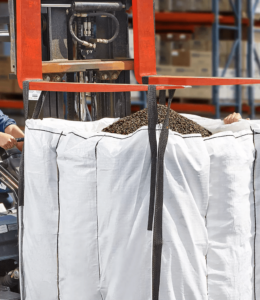
If you work in an industry that involves handling bulk materials, you’ve probably come across super sacks or flexible intermediate bulk containers (FIBCs). These large bags are made of woven polypropylene or polyethylene fabric and can hold anywhere from 500 to 4000 pounds of dry materials such as powders, granules, and pellets.
Super sacks are becoming increasingly popular due to their cost-effectiveness, space-saving properties, and ability to keep materials safe from moisture, pests, and contamination. However, the challenge lies in unloading the materials from the sacks safely, efficiently, and cleanly. This is where a super sack unloader comes in.
A super sack unloader is a material handling equipment that transfers bulk materials from the large flexible bags to downstream processing equipment, such as mixers, hoppers, conveyors, or packaging machines. It is also commonly known as a bulk bag unloader.
The unloader typically consists of a steel frame, a hoist, a bag support, and a discharge mechanism. The frame provides a stable and ergonomic structure for the unloading process. The hoist is used to lift the bag into the unloader and lower it onto the bag support, which keeps the bag in place during the unloading process. The discharge mechanism can vary depending on the type of material being unloaded and the downstream equipment.
There are various types of discharge mechanisms available for super sack unloaders. The most common is the spout, which is a flexible sleeve that attaches to the bag and connects to the downstream equipment. The liner is used for hygienic or hazardous materials and acts as a barrier between the bag and the product. The glove box is used for materials that require containment, such as pharmaceuticals or chemicals. The dust collection system is used to capture and filter any airborne dust or particles generated during the unloading process.
To operate a super sack unloader, the operator usually follows a few simple steps. First, they position the unloader under the super sack and attach the hoist to the bag. Next, they lift the bag into the unloader and lower it onto the bag support. Then, they untie or cut the bag spout and attach it to the downstream equipment. Once the discharge valve is opened and the downstream equipment started, the unloading process begins. Throughout the process, the operator monitors for any issues such as dusting, clogging, or leakage. Finally, when the bag is empty, they close the discharge valve, detach the bag spout, and remove the bag.
Super sack unloaders can be manual, semi-automatic, or fully automatic, depending on the level of automation and control needed for the application. Manual unloaders require more operator involvement and are suitable for small to medium batches. Semi-automatic unloaders use some automated features, such as an electric hoist or a vibratory motor, to assist the operator and improve productivity. Fully automatic unloaders use programmable logic controllers (PLCs) and sensors to control the entire unloading process, from bag handling to material flow, with minimal operator intervention.
In conclusion, super sack unloaders are essential pieces of equipment for handling bulk materials in super sacks. They provide a safe, efficient, and clean way to transfer materials from large, flexible bags to downstream processing equipment. If you’re in an industry that deals with bulk materials, it’s worth considering investing in a super sack unloader to improve your productivity, reduce costs, and ensure the safety and quality of your materials.
Order Lumper Services in Vancouver
Get in touch with us to arrange for your next service
Share this post with your friends
Recent Posts

- 604-757-7804
- 604-757-7804
- info@LumperHQ.com