Proper Lifting Techniques in the Warehouse: Prevent Injuries and Improve Productivity
Warehouses are fast-paced environments where employees regularly lift, carry, and move heavy materials. While these tasks are a normal part of warehouse operations, improper lifting techniques can lead to serious injuries, lost productivity, and increased costs for employers.
Learning and following proper lifting procedures is one of the simplest ways to create a safer workplace and reduce the risk of strains, sprains, and long-term musculoskeletal injuries.
Why Proper Lifting Matters
According to workplace safety organizations, back injuries are among the most common workplace injuries in warehouses and distribution centers. A single improper lift can result in:
- Back strains and muscle tears
- Shoulder injuries
- Hernias
- Knee injuries
- Lost work time
- Increased workers' compensation claims
By using proper lifting techniques, warehouse employees can protect themselves while maintaining efficiency throughout their shift.
Before You Lift
Before attempting to lift any object, take a few seconds to assess the situation:
1. Check the Weight
If the load appears too heavy, ask for assistance or use material handling equipment such as:
- Pallet jacks
- Forklifts
- Hand trucks
- Lift-assist devices
2. Plan Your Route
Ensure the path is clear of:
- Debris
- Wet floors
- Obstacles
- Uneven surfaces
3. Test the Load
Gently push or lift one corner to estimate the weight before fully lifting the item.
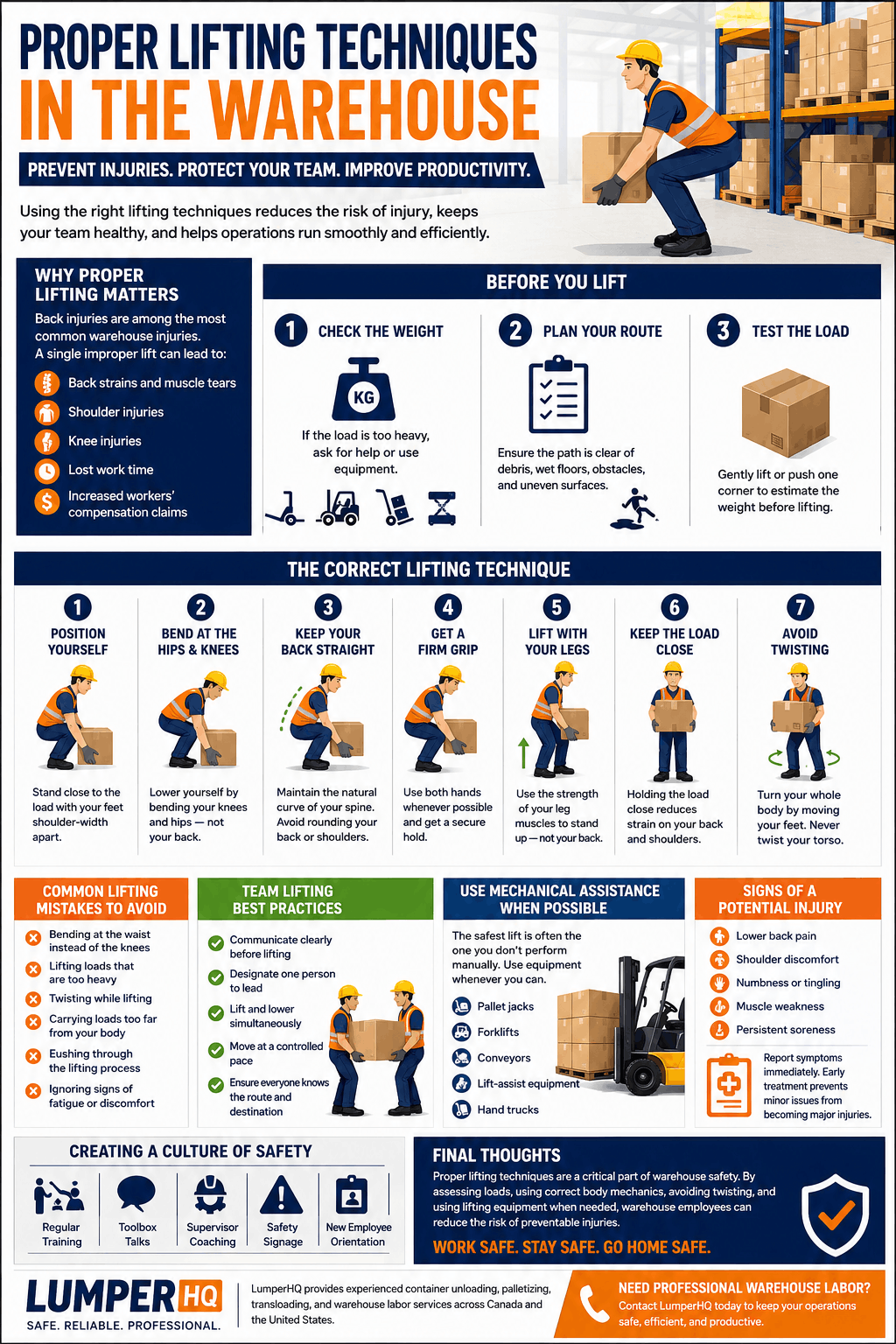
The Correct Lifting Technique
Step 1: Position Yourself Properly
Stand close to the load with your feet shoulder-width apart. One foot can be slightly ahead of the other for better balance.
Step 2: Bend at the Hips and Knees
Lower yourself by bending your knees and hips—not your back.
Step 3: Keep Your Back Straight
Maintain the natural curve of your spine throughout the lift. Avoid rounding your shoulders or hunching forward.
Step 4: Get a Firm Grip
Use both hands whenever possible and ensure you have a secure hold on the object.
Step 5: Lift With Your Legs
Use the strength of your leg muscles to stand up while keeping the load close to your body.
Step 6: Keep the Load Close
Holding a load away from your body increases stress on your back and shoulders.
Step 7: Avoid Twisting
Never twist your torso while carrying a load. Instead, move your feet and turn your entire body.
Common Lifting Mistakes to Avoid
Many workplace injuries occur because employees:
- Bend at the waist instead of the knees
- Lift loads that are too heavy
- Twist while lifting
- Carry loads too far from their body
- Rush through the lifting process
- Ignore signs of fatigue
Taking a few extra seconds to lift correctly can prevent months of recovery from an injury.
Team Lifting Best Practices
For oversized or heavy items:
- Communicate clearly before lifting
- Designate one person to lead commands
- Lift and lower simultaneously
- Move at a controlled pace
- Ensure everyone understands the destination and route
Team lifting reduces strain and improves load control.
Use Mechanical Assistance When Possible
The safest lift is often the one you don't perform manually.
Warehouse operators should encourage workers to use:
- Pallet jacks
- Reach trucks
- Forklifts
- Conveyor systems
- Vacuum lifting devices
- Ergonomic lifting equipment
These tools not only improve safety but also increase productivity.
Signs of a Potential Lifting Injury
Employees should report symptoms immediately, including:
- Lower back pain
- Shoulder discomfort
- Numbness or tingling
- Muscle weakness
- Persistent soreness
Early reporting and treatment can prevent minor injuries from becoming major issues.
Creating a Culture of Safety
Proper lifting techniques should be reinforced through:
- Regular safety training
- Toolbox talks
- Supervisor coaching
- Safety signage
- New employee orientation
When warehouse teams prioritize safety, injury rates decrease and operational efficiency improves.
Final Thoughts
Proper lifting techniques are a critical part of warehouse safety. By assessing loads, using correct body mechanics, avoiding twisting motions, and utilizing lifting equipment when necessary, warehouse employees can significantly reduce their risk of injury.
At LumperHQ, safety is a priority. Professional unloading and warehouse labor teams should always follow industry best practices to ensure efficient operations while protecting workers from preventable injuries.
Need Professional Warehouse Labor?
LumperHQ provides experienced container unloading, palletizing, transloading, and warehouse labor services across Canada and the United States. Contact us today to learn how our trained teams can help keep your operations safe, efficient, and productive.