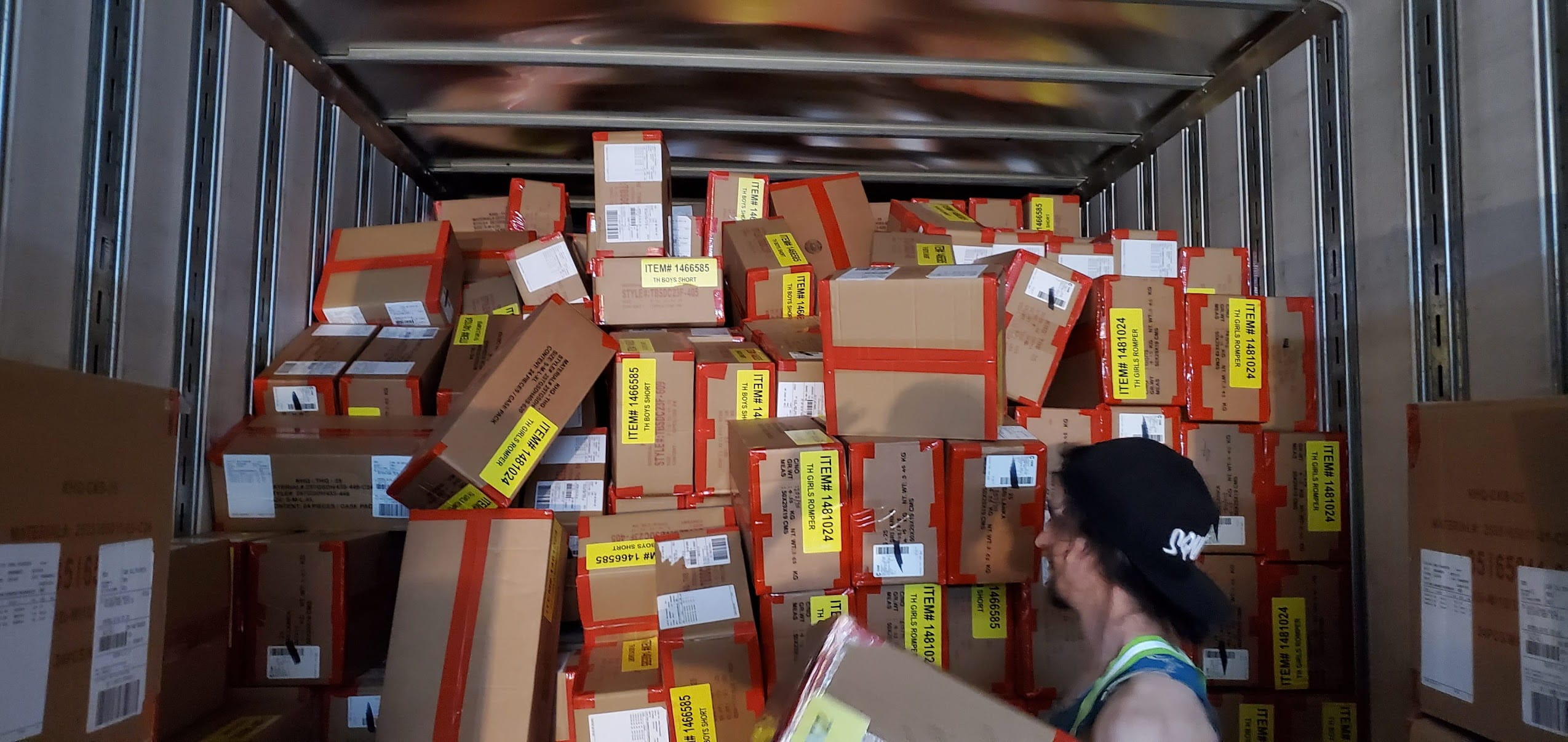
A mixed load is a shipment that contains multiple types of products, SKUs, purchase orders, or items from different customers within the same truck, trailer, container, or pallet.
Unlike a single-product load, mixed loads require additional sorting, handling, and organization because the freight must be separated and placed in the correct locations during unloading.
Common Examples of Mixed Loads
A container containing products for multiple retail stores.
A shipment with several different SKUs on the same pallet.
A trailer carrying freight for multiple customers.
A warehouse receiving various product categories in a single delivery.
Benefits of Mixed Loads
✅ Maximizes trailer and container space
✅ Reduces transportation costs
✅ Improves freight consolidation
✅ Allows multiple shipments to move together
Challenges of Mixed Loads
Longer unloading times
More sorting and verification required
Increased risk of shipping errors
Additional labor may be needed
Mixed loads are common in retail, e-commerce, food distribution, and third-party logistics (3PL) operations, where maximizing transportation efficiency is a priority. Proper labeling, organization, and unloading procedures help ensure mixed-load shipments are processed accurately and efficiently.