What's the Difference Between a Conex Box and a Shipping Container?
If you've ever searched for storage containers or freight equipment, you've probably come across the terms Conex box and shipping container. Many people use these terms interchangeably, but are they actually the same thing?
The short answer is yes—most of the time. A Conex box is a type of shipping container, but the name has an interesting history.
What Is a Conex Box?
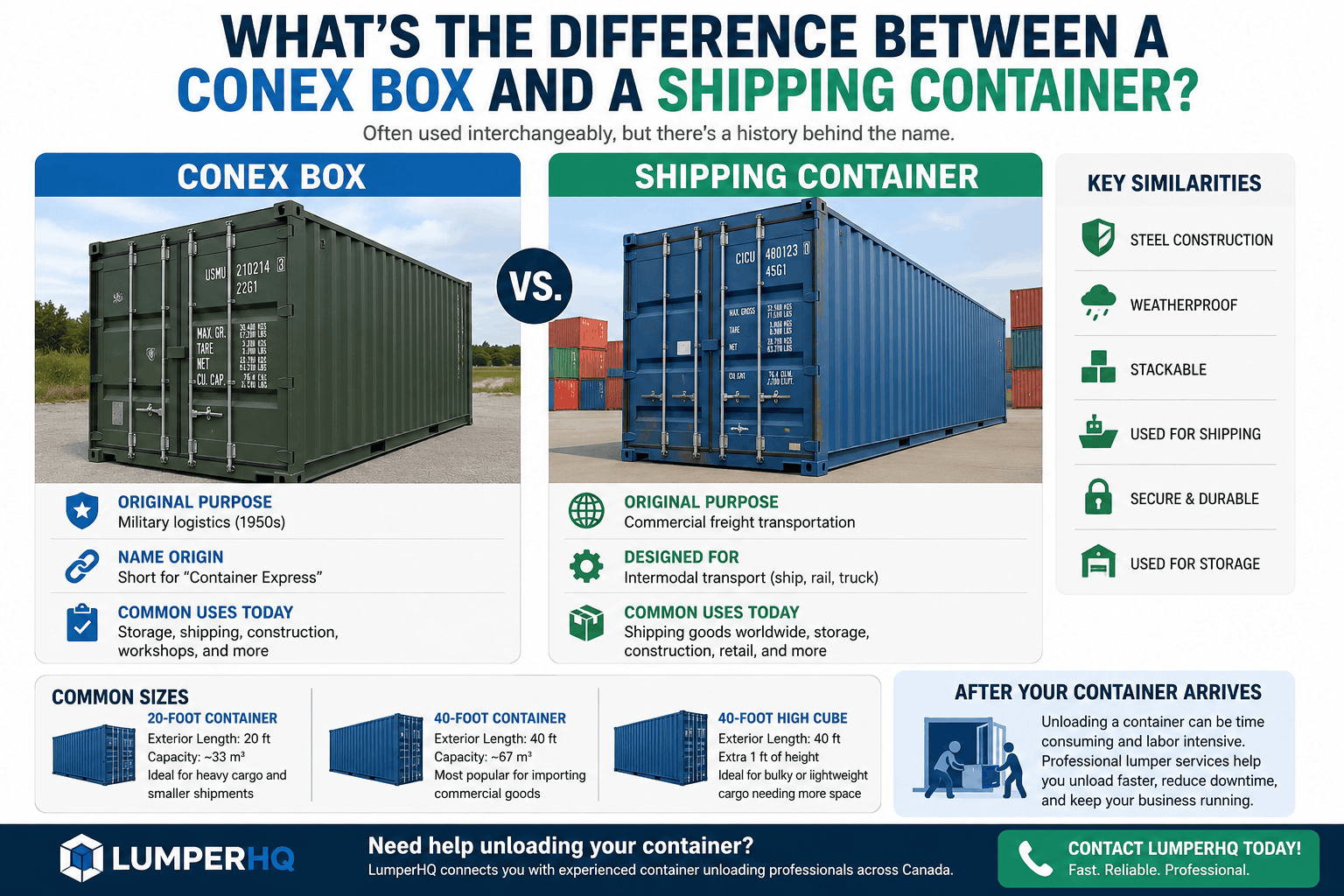
The term Conex comes from the phrase "Container Express." It originated with the U.S. military in the 1950s, when durable steel containers were developed to transport supplies efficiently around the world.
These original Conex boxes were designed for military logistics and became known for their strength, weather resistance, and portability.
Today, many people still use the term "Conex box" to describe any large steel shipping container, even if it wasn't manufactured for military use.
What Is a Shipping Container?
A shipping container is a standardized steel container designed to transport cargo by:
- Cargo ships
- Rail
- Truck
- Crane
- Intermodal transportation systems
Modern shipping containers follow international ISO standards, allowing them to move seamlessly between ships, trains, and trucks without unloading the cargo inside.
These containers are used every day to move products around the world.
Conex Box vs. Shipping Container
FeatureConex BoxShipping ContainerOriginal PurposeMilitary logisticsCommercial freightMaterialSteelSteelWeatherproofYesYesStackableYesYesUsed for ShippingYesYesUsed for StorageYesYes
In everyday conversation, there is very little difference between the two terms.
Common Shipping Container Sizes
The most common sizes include:
20-Foot Container
- Exterior length: 20 feet
- Capacity: Approximately 33 cubic metres
- Ideal for heavy cargo and smaller shipments
40-Foot Container
- Exterior length: 40 feet
- Capacity: Approximately 67 cubic metres
- Most popular choice for importing commercial goods
40-Foot High Cube
A High Cube container provides an extra foot of interior height, making it ideal for bulky or lightweight cargo that requires additional space.
Common Uses for Conex Boxes
Today, Conex boxes are used for much more than international shipping.
Popular applications include:
- Warehouse storage
- Construction site storage
- Mobile workshops
- Farm equipment storage
- Retail inventory
- Emergency disaster relief
- Modular offices
- Tiny homes
- Pop-up retail spaces
Their durability makes them one of the most versatile storage solutions available.
How Much Weight Can a Shipping Container Hold?
Although specifications vary slightly by manufacturer, typical maximum payloads include:
- 20-foot container: Up to approximately 28,000 kg (61,700 lbs)
- 40-foot container: Up to approximately 26,500 kg (58,400 lbs)
Always verify weight limits with your shipping company before loading.
After Your Container Arrives
Whether you call it a Conex box or a shipping container, unloading it efficiently is just as important as transporting it.
Floor-loaded containers can take several hours to unload without the proper equipment or experienced workers. Professional lumper services help businesses unload containers faster, reduce warehouse downtime, and keep receiving schedules on track.
Need Professional Container Unloading?
LumperHQ connects warehouses, importers, and logistics companies with experienced container unloading crews across Canada. Whether your shipment arrives in a 20-foot or 40-foot container, our professionals can unload it safely, efficiently, and on schedule.
Contact LumperHQ today to find reliable container unloading services near you.